How Australian Tourism Businesses Are Using AI-Driven Personalisation to Capture the Global Travel Market
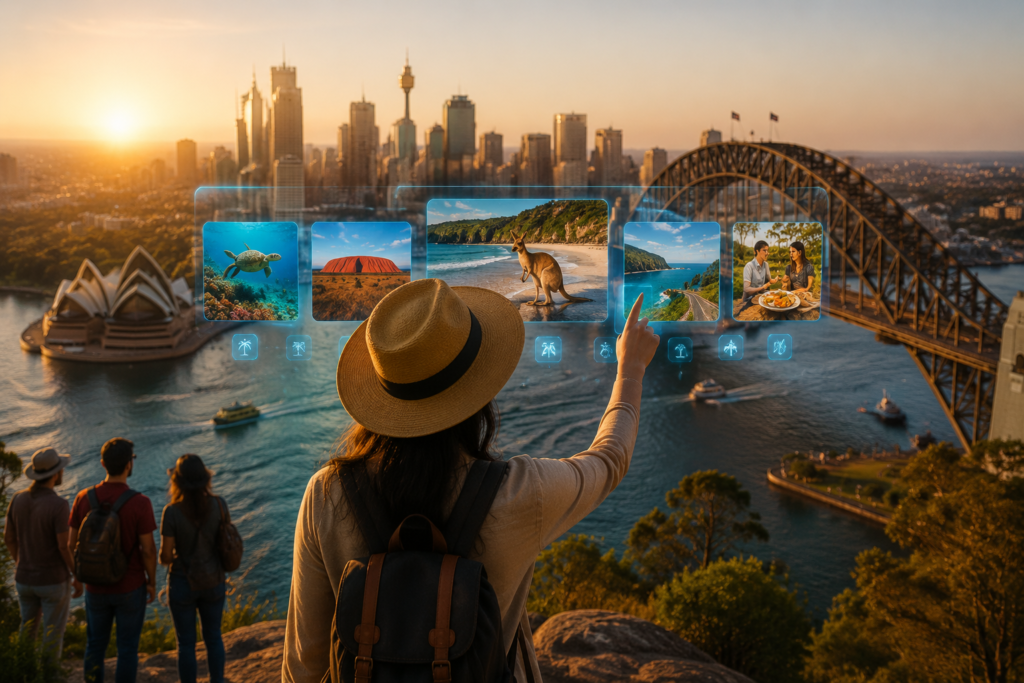
Australian tourism operators are no longer simply selling destinations; they are crafting hyper-personalised digital journeys that begin long before a traveller books a flight. In 2026, the most successful strategies revolve around artificial intelligence, real-time data, and immersive content designed to meet the individual preferences of international visitors from Kuala Lumpur to London.
The Shift from Mass Marketing to Individual Relevance
Traditional global campaigns are giving way to dynamic, AI-powered platforms. Companies such as Journey Beyond and Experience Co are using machine learning algorithms to analyse browsing behaviour, past travel history, and even social sentiment. This allows them to serve tailor-made itineraries to a German family seeking outback adventures while simultaneously offering a separate luxury coastal drive package to a couple from Singapore. The result is a dramatic uplift in conversion rates because the customer feels understood rather than targeted.
Real-Time Customisation Through Data Hubs
Tourism Australia’s own digital ecosystem is now built on a centralised visitor data platform that integrates airline search data, hotel queries, and experiential bookings. According to the organisation’s mid‑2026 performance update, markets where AI-guided content was deployed saw a 27 percent increase in booking inquiries quarter‑on‑quarter. View the latest international visitor statistics from Tourism Australia for the year ending June 2026, which show digital‑first markets like South Korea and the United States driving the strongest recovery.
Immersive Pre-Travel Experiences
Virtual reality showrooms and 360‑degree live streams have become standard tools. Dive operators in Queensland, for instance, now offer live underwater VR sessions hosted by marine biologists. Potential visitors in Europe can “swim” the Great Barrier Reef in real time before committing to a booking. This sensory-rich approach removes uncertainty and creates emotional commitment, a vital factor for long-haul travellers who compare multiple premium destinations.
Hyper-Local Influencer Collaborations
Rather than relying solely on macro‑influencers, tourism operators are partnering with micro‑creators who hold deep trust within niche communities. A winery in the Barossa Valley might collaborate with a Japanese sommelier influencer for an exclusive stream, while a Tasmanian wilderness lodge works with a Scandinavian slow‑travel blogger. These partnerships generate authentic, segmented reach at a fraction of traditional media costs.
Predictive Analytics for Capacity Management
Advanced forecasting models now let companies anticipate demand surges from specific regions. When data signals an uptick in interest from India during the Diwali holiday window, airlines and tour operators can adjust pricing, add culturally appropriate meals, and hire Hindi‑speaking guides pre‑emptively. This operational agility, powered by AI, transforms a reactive business into a proactive hospitality engine.
The digital layer has become the core product wrapper, turning Australia’s natural and cultural assets into infinitely customisable travel stories that feel personally written for every visitor on the planet.