The $7 Billion Export Engine: How Australian Fashion Became a Global Economic Force
The Numbers Behind the Boom
Australian fashion has quietly transformed from a domestic cottage industry into a global economic powerhouse. The sector now contributes $27.2 billion to the national economy** and generates **$7.2 billion in exports annually—a figure that dwarfs Australia’s famed wine exports by nearly threefold. This isn’t a story of gradual growth; it’s a story of structural transformation.
Why Australian Fashion Exports Matter Now
The Asia-Pacific fashion market alone is valued at over $700 billion, representing roughly 40 per cent of the total global fashion market. Australian brands are increasingly positioning themselves to capture a meaningful share of that spending, moving beyond the traditional strategy of using the United States as the primary entry point for international expansion.
The Shift Away from US Dependency
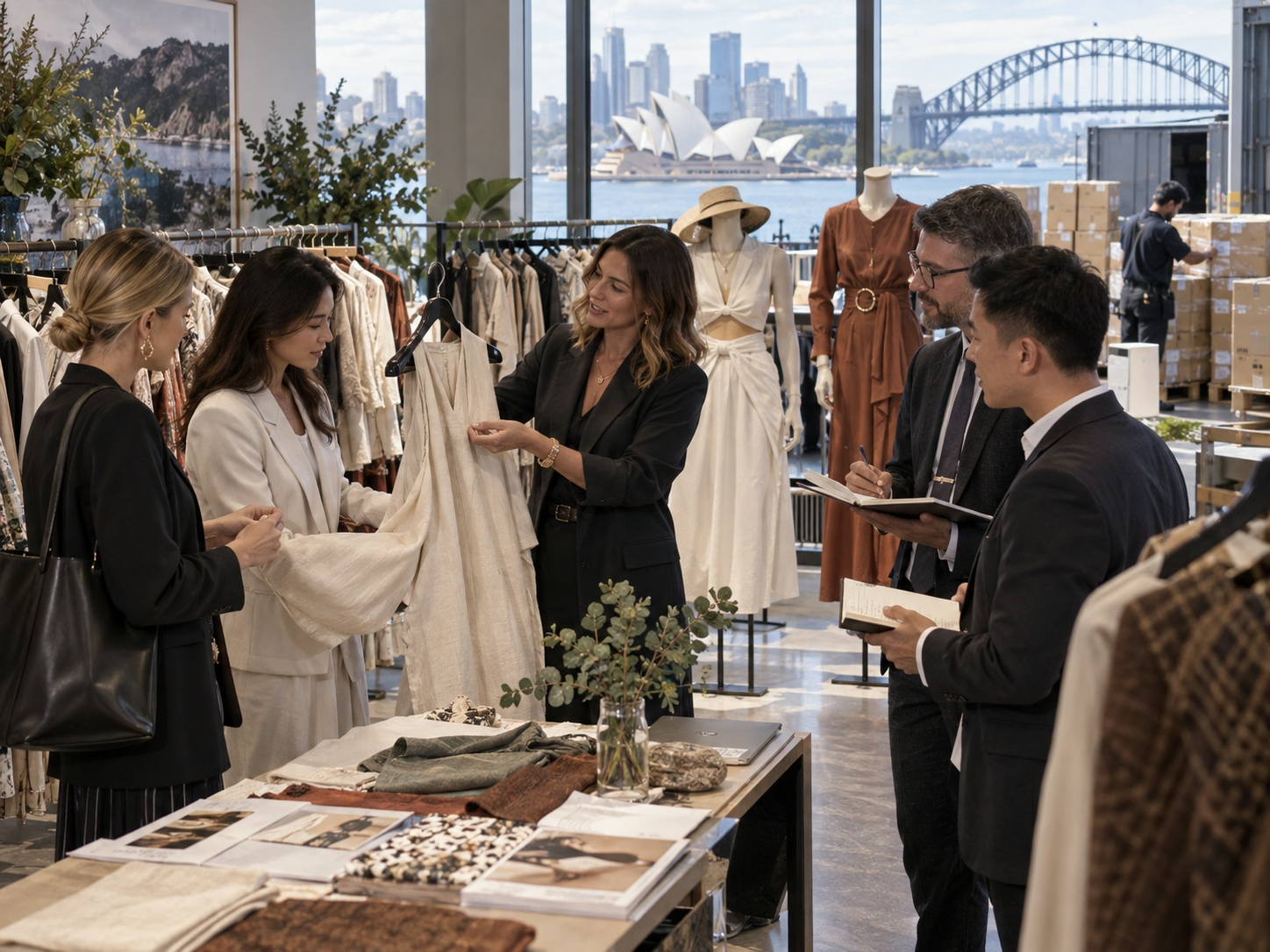
For decades, Australian designers followed a predictable path: scale locally, then target the US market through wholesale partnerships with department stores like Saks Fifth Avenue and Nordstrom. That strategy delivered results—Saks Global alone stocked 44 Australian brands across its portfolio, including Zimmermann, Aje, Camilla, and Rebecca Vallance.
However, the collapse of Saks Global in January 2026 exposed the fragility of this approach. The luxury retail group filed for Chapter 11 bankruptcy owing more than $700 million to its 30 largest unsecured creditors**, with Australian designers among those facing significant losses. Camilla alone was owed **US$2.8 million. This event catalysed a strategic reckoning across the Australian fashion sector.
Government-Backed Export Diversification
In response, the Australian Fashion Council (AFC), supported by the Australian Government’s $55 million Accessing New Markets Initiative (ANMI), has accelerated its Global Gateways program, sending designers to Hong Kong, Paris, and eventually Dubai to open diversified export pathways.
The results have been striking. At CENTRESTAGE Hong Kong 2026, the AFC’s ten-designer delegation attracted over 180 buyer appointments—triple the interest from the previous year—with strong engagement from buyers in Korea, Taiwan, Japan, and the United Kingdom.
The EU Trade Opportunity
A newly secured trade deal between the EU and Australia, which includes the elimination of tariffs on exports to the EU, has opened market access to 27 additional countries, further reducing the traditional cost barriers that previously disadvantaged Australian fashion businesses in European markets.
The Road Ahead
The data tells a clear story: Australian fashion is no longer a niche player reliant on a single export market. With coordinated government support, a diversifying buyer base across Asia and Europe, and a product offering that resonates globally, the sector is building the infrastructure for sustained international growth. The $7 billion export figure is not a ceiling—it is a platform.