Inside Arkeus: The Melbourne Garage Startup Turning Hyperspectral Eyes into Pentagon Contracts
From a One-Car Garage to a $100 Million Valuation
In 2020, Simon Olsen and aerospace engineer Dr Jonathan Nebauer began building sensing technology in a one-car garage in Melbourne. Their inspiration came from a frontline problem: drone operators hunting illicit operations in Colombia were drowning in false positives because the machines could capture data but could not understand it in time to act. Five years later, that garage project has become Arkeus, a defence tech company that has just closed a $25 million Series A at a valuation of around $100 million—roughly seven times its seed valuation from two years earlier.
The round was led by QIC Ventures, with new investors R+VC, Folklore Ventures and Dyne Ventures joining existing backers Main Sequence Ventures, Salus Ventures and Beaten Zone Venture Partners. The capital is earmarked for advanced manufacturing in Queensland and the United States, a move that supports sovereign defence capability while accelerating delivery into operational use.
The Perception Bottleneck, Not the Platform
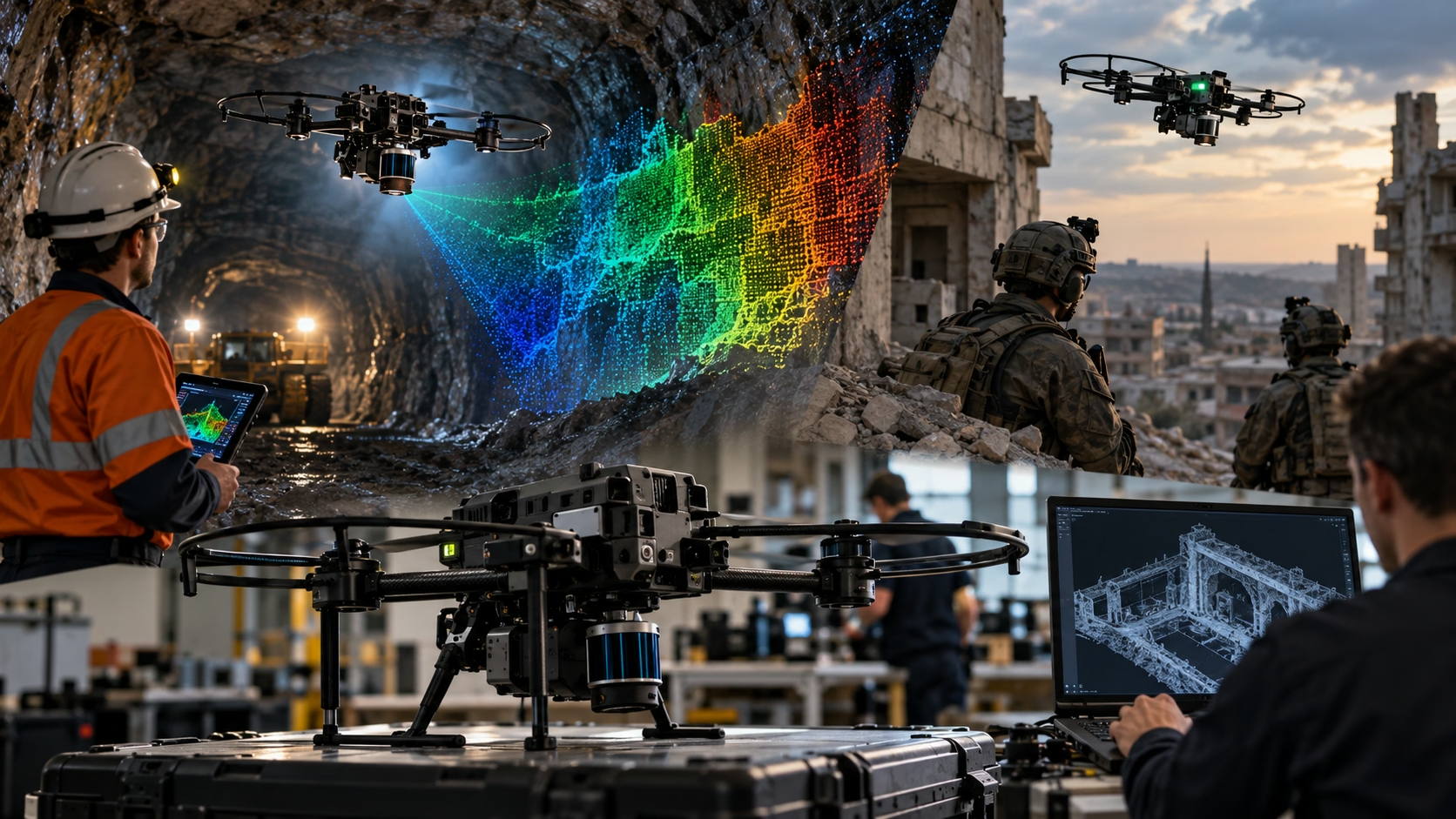
Arkeus’s core argument is that the next generation of autonomy is limited not by airframes or batteries but by perception. “Machines can’t act autonomously if they can’t truly perceive their environment,” Olsen said. “In the moments that matter most, systems are still flying blind”. The company’s answer is a full-stack optical sensing system built around hyperspectral optical radar, which captures multiple layers of visual data simultaneously. On-device AI then detects, classifies and tracks objects across land, air and sea, day or night, including in degraded or contested environments where traditional sensors struggle.
That capability has already moved from the lab into uniformed service. In November 2025, Arkeus secured the Australian Army Wide Area Airborne Surveillance Program to enhance the sensing capabilities of its tactical uncrewed aerial systems fleet. More striking, the company has won contracts with the US Department of War after competitive evaluations against American incumbents—a rare achievement for an Australian startup selling into the Pentagon’s home market. Its sensors are integrated with major drone platforms from AeroVironment, Textron, Tekever and Boeing subsidiary Insitu.
Why the Timing Matters for Australia’s Defence Tech Wave
Arkeus sits at the intersection of two structural shifts. The first is the global move from human-piloted drones to software-defined autonomous systems where sensing and decision-making happen at the edge. QIC Ventures Investment Director Nick Capell framed the bet around precisely that transition: “We’re seeing defence move toward software-defined, autonomous systems where sensing and decision-making at the edge are critical”. The second is Australia’s own sovereign defence buildup. The federal government is standing up a $1 billion Advanced Capabilities Investment Fund co-funded by private venture capital, and the Navy recently committed $176 million to 40 maritime drones from Sydney’s Ocius—platforms that Arkeus sensors could plausibly equip.
For a company that began with two founders watching operators struggle with data overload, the Series A is less a finish line than a scaling trigger. Arkeus is positioning its sensing stack as foundational infrastructure for autonomous operations—not a bolt-on, but the eyes and brain that let machines act with certainty in complex environments. As Olsen put it, the ambition is to ensure that “any autonomous system operating in complex environments has the ability to see, understand and act”. The garage is gone; the production line is next.