Australia’s Quantum Startups in 2026: How Research Breakthroughs Are Becoming Commercial Computing, Navigation and Energy Solutions
Australia’s Quantum Industry Is Entering a Commercial Era
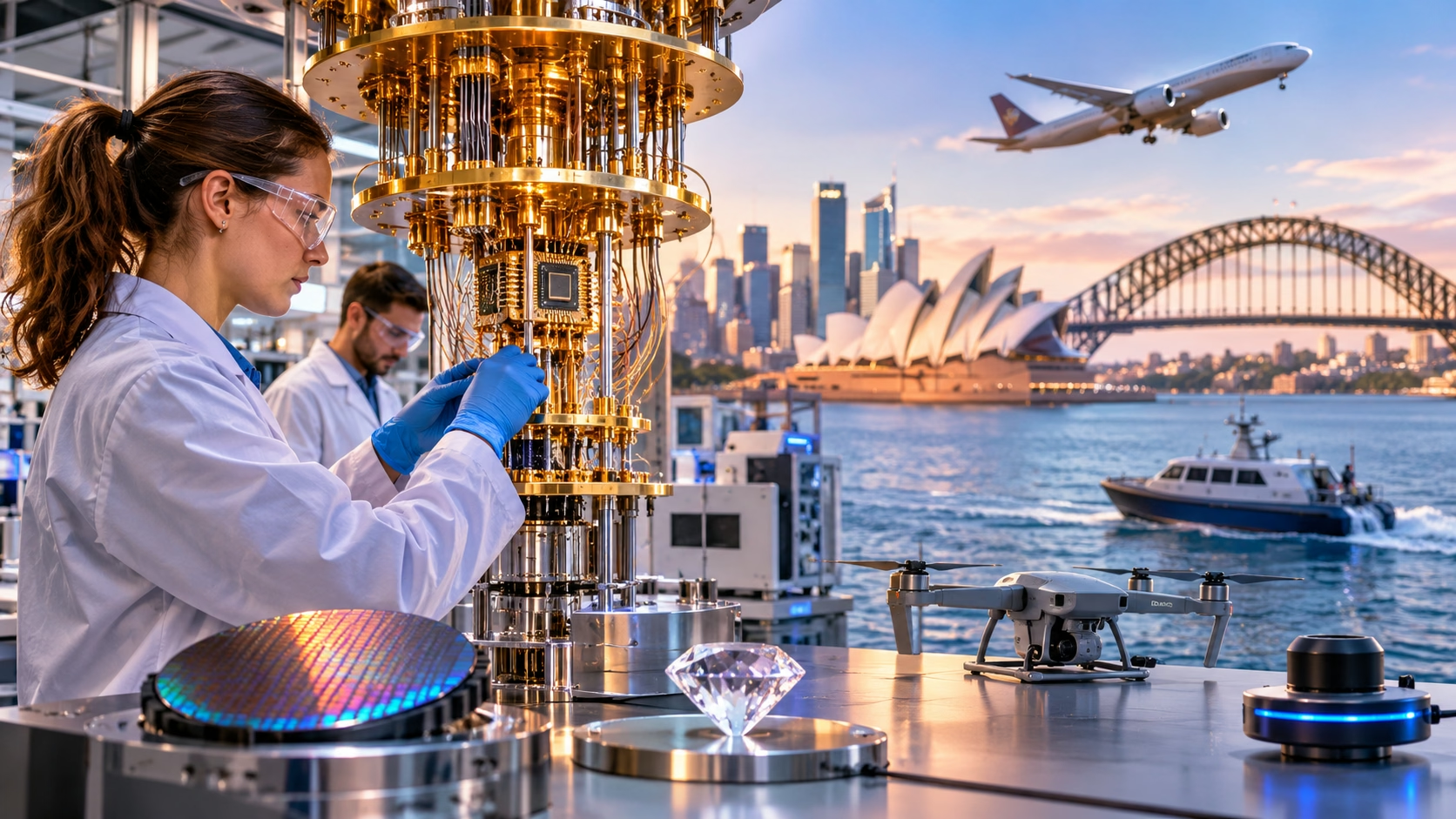
Australia’s quantum technology sector is moving beyond experimental research as startups begin developing commercially relevant products for computing, navigation, energy management and advanced manufacturing.
Supported by universities, government investment and international technology partnerships, Australian quantum companies are increasingly focusing on applications that address measurable industrial challenges.
The transformation reflects a significant change in the country’s innovation ecosystem. Rather than concentrating exclusively on scientific discoveries, emerging businesses are developing hardware, software and sensing systems that can operate within existing commercial infrastructure.
Developments throughout 2026 illustrate how this transition is accelerating, although many quantum computing applications remain in experimental or demonstration stages.
Government Funding Connects Quantum Research With Industry
In October 2026, the Australian Government announced AUD 12.3 million in funding for six projects through the Critical Technologies Challenge Program.
According to the official government announcement published on October 2, 2026, the investment supports quantum applications in energy, healthcare, biosecurity and transportation.
Sydney-based Silicon Quantum Computing received AUD 3.6 million to advance a quantum-enhanced artificial intelligence processor.
Working alongside Schneider Electric and the University of New South Wales, the company aims to improve energy forecasting and renewable electricity integration.
These projects demonstrate how government-backed research is being directed toward practical industry requirements rather than technological development alone. minister.industry.gov.au
Diraq Brings Quantum Computing Into Commercial Data Centres
Another major development emerged in September 2026 when Australian startup Diraq announced a partnership with global digital infrastructure provider Equinix.
The companies outlined plans to install a silicon-spin quantum computer inside a commercial data centre in Sydney.
The proposed system contains eight qubits and integrates cryogenic cooling and control electronics within infrastructure designed to operate alongside conventional servers.
According to Equinix’s September 2026 announcement, the installation is designed to consume less than 20 kilowatts.
The project represents an important step toward hybrid computing environments where quantum processors complement conventional computing and artificial intelligence systems. Equinix Newsroom
Quantum Sensing Creates Opportunities Beyond Computing
Quantum innovation is also advancing in transportation and positioning technologies.
In August 2026, Sydney-based Q-CTRL announced a successful maritime demonstration of GPS-free navigation using quantum gravity sensing.
During trials in Australia’s Coral Sea, the company reported positioning accuracy of approximately one nautical mile without relying on satellite navigation.
The technology measures subtle variations in Earth’s gravitational field to support navigation.
Such capabilities could eventually benefit shipping, aviation and defence operations in environments where GPS signals are unavailable or disrupted. Q-CTRL
Advanced Manufacturing Strengthens Australia’s Quantum Ecosystem
Australia’s commercial ambitions also extend to quantum hardware manufacturing.
Quantum Brilliance opened a commercial quantum diamond foundry in Melbourne in November 2025, establishing infrastructure for producing specialised synthetic diamonds used in room-temperature quantum devices.
Meanwhile, PsiQuantum began constructing its proposed utility-scale quantum computing facility at Moreton Bay, Queensland, in June 2026.
Both developments highlight the importance of manufacturing capability, specialised infrastructure and supply-chain development.
Despite technological progress, commercialisation still depends on performance validation, manufacturing reliability and sustainable customer demand.
For Australian startups, the defining opportunity is converting scientific expertise into dependable products that businesses can integrate into everyday operations.