Big Players and Changing Habits
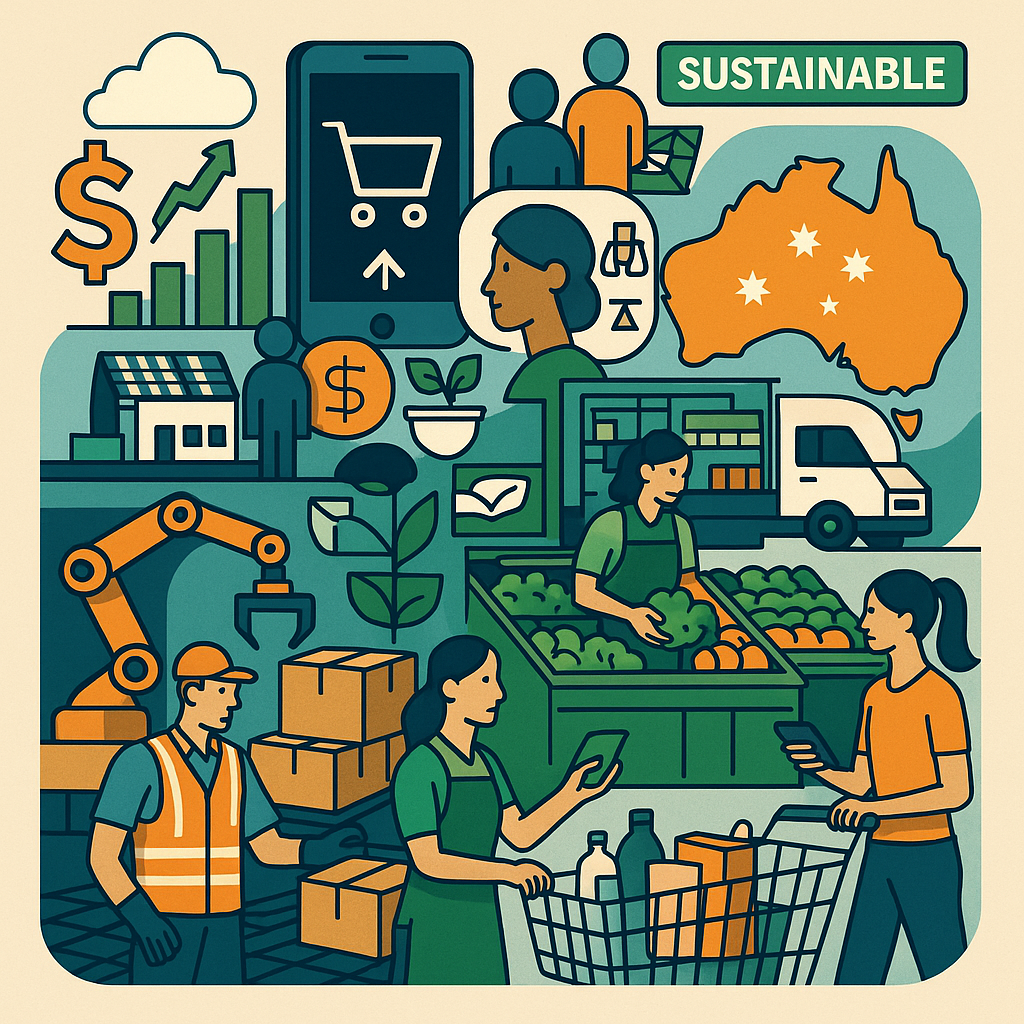
Australian retail is often described as “highly concentrated,” and that reputation is well earned. A small group of large companies dominate supermarket, discount department store, and household goods spending. Supermarket giants control much of the food and grocery market, while major department store groups and pharmacy chains capture another large slice of everyday consumer expenditure. This concentration shapes everything from pricing power to how quickly new retail trends are adopted nationwide.
For years, Australian shoppers were loyal to familiar brands and local shopping centres. Weekly trips to the supermarket, weekend excursions to a big mall, and occasional splurges at department stores formed the core of consumer behaviour. That model hasn’t disappeared, but it has been steadily transformed by technology, demographic shifts, and cost-of-living pressures. Consumers are now more informed, more demanding, and far more willing to switch retailers if they feel they are not getting value or convenience.
Online retailing has been the most obvious disruptor. International platforms have put pressure on local players, while established Australian retailers have invested heavily in their own e-commerce capabilities. Today, it’s standard for major chains to offer user-friendly apps, integrated loyalty programs, and flexible delivery or click-and-collect options. Regional consumers who once had limited choice can now access a much wider range of products, which subtly reduces the grip of physical store networks.
At the same time, smaller niche retailers and direct-to-consumer brands have used social media and digital marketing to reach audiences that used to belong almost entirely to the big chains. These newcomers rarely challenge the largest firms on overall market share, but they have changed consumer expectations around product uniqueness, sustainability, and authenticity. Large Australian retailers have responded by expanding private-label ranges, partnering with local producers, and promoting their ethical sourcing and environmental initiatives.
Cost-of-living pressure has also played a central role in changing shopping patterns. Households increasingly look for discounts, specials, and loyalty rewards, forcing even dominant companies to compete aggressively on price and perception of value. The rise of discount supermarkets and warehouse-style stores has pushed incumbents to rethink pack sizes, price ladders, and promotional strategies. High-frequency “top-up” shopping has grown alongside traditional big weekly shops, and retailers must now cater to both behaviours at once.
In-store experiences have evolved as well. Major players are reshaping layouts, improving fresh food offerings, and enhancing customer service to justify their dominance and help differentiate from cheaper or purely online rivals. Technology such as self-checkout, digital shelf labels, and in-store data analytics allows them to manage labour costs while still offering speed and convenience to customers.
In short, Australian retail companies continue to dominate by virtue of scale, brand recognition, and national store networks. However, their position is no longer guaranteed by size alone. Consumer expectations—driven by digital access, value consciousness, and growing interest in ethical issues—are pushing even the largest retailers to innovate. The landscape is now characterised by a blend of large incumbents, agile online competitors, and increasingly empowered shoppers who expect more choice, transparency, and flexibility than ever before.