Corporate Policies in Australia: Sustainable and Ethical Business Practices
Australia has long been a leader in promoting corporate responsibility, where businesses are expected to uphold both sustainable and ethical practices. The landscape of corporate governance in Australia is evolving, with growing pressure from regulators, investors, and consumers for businesses to act with greater accountability towards social and environmental issues. Corporate policies that reflect sustainability and ethics are increasingly seen as essential in building long-term business value and trust with stakeholders.
Australia’s commitment to sustainability is enshrined in various policies and frameworks that encourage businesses to reduce their environmental impact. The government’s initiatives, such as the National Greenhouse and Energy Reporting (NGER) scheme, require corporations to report on their emissions and energy consumption. This transparency fosters accountability and supports the national goal of reducing carbon emissions. Companies operating in Australia are also encouraged to adopt more environmentally friendly practices, from reducing waste to incorporating renewable energy solutions in their operations.
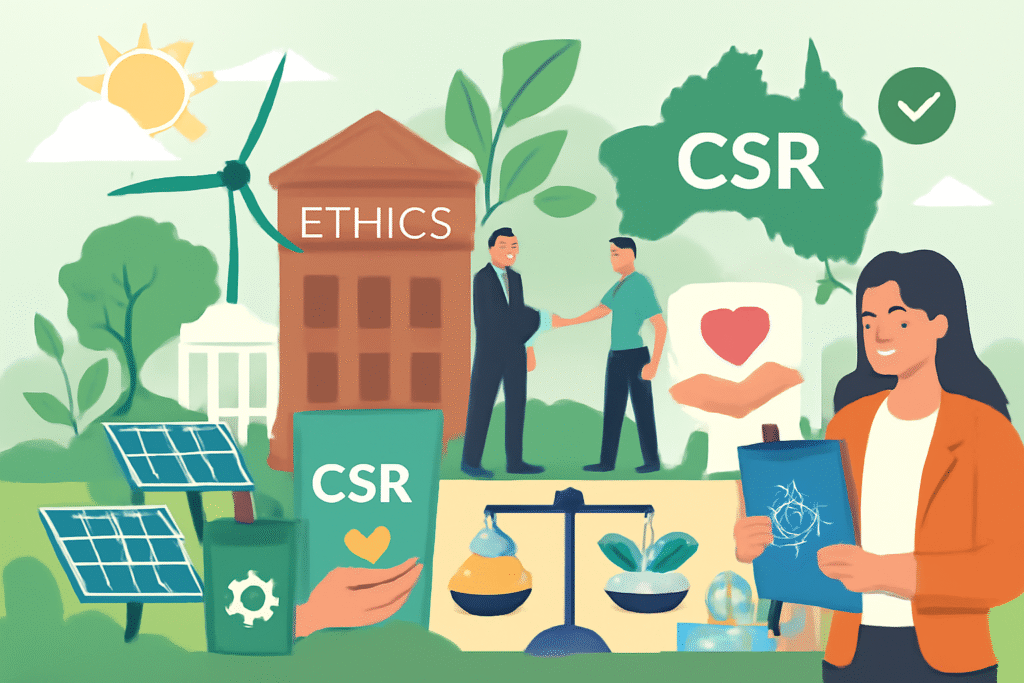
Moreover, Australia’s corporate governance framework promotes ethical behavior in business. The Australian Securities and Investments Commission (ASIC) plays a critical role in ensuring that companies adhere to ethical standards, particularly concerning fairness, integrity, and transparency in their dealings with investors, employees, and consumers. Australian businesses are expected to follow the principles of corporate social responsibility (CSR), which involve taking responsibility for the social and environmental impacts of their operations. Ethical decision-making is not just about compliance, but about fostering a culture of respect, fairness, and integrity within the organization.
In the Australian context, many corporations have integrated sustainability and ethics into their business models by focusing on three key pillars: environmental stewardship, social responsibility, and good governance. Leading Australian companies such as BHP and Westpac have introduced policies that aim to reduce their environmental footprint, improve their corporate social responsibility, and align with global standards such as the United Nations Sustainable Development Goals (SDGs).
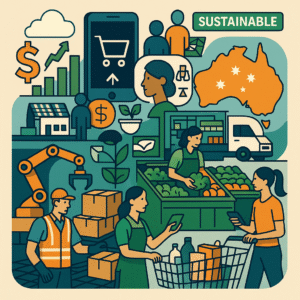
An important aspect of sustainable business practices in Australia is the emphasis on supply chain transparency. Australian businesses are increasingly required to ensure that their suppliers also adhere to ethical and sustainable standards. The modern consumer demands greater visibility into where products come from and how they are made. Companies are now under pressure to demonstrate that their supply chains are free from human rights violations and that they prioritize environmental sustainability.
In conclusion, the corporate policy landscape in Australia is shifting towards a future where sustainability and ethics are no longer just optional add-ons, but integral to a company’s core values. As the regulatory environment becomes stricter, and societal expectations grow, businesses in Australia are adopting more sustainable and ethical practices to stay competitive and align with global trends. Embracing sustainability not only protects the environment but also drives long-term growth by improving brand reputation, consumer loyalty, and operational efficiency.