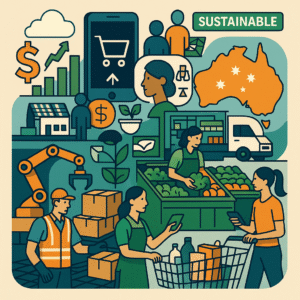
From Boardrooms to Bushlands: How Multinationals Shape Australia’s Economy and Communities

Multinational corporations (MNCs) are woven into Australia’s economic fabric, influencing everything from commodity exports and technology ecosystems to retail competition and regional employment. Their global scale allows them to bring capital, management know-how, and advanced logistics to Australian markets. The benefits can be tangible: new jobs, infrastructure upgrades, and pathways for domestic suppliers to enter international value chains. Yet the same global reach can intensify pressure on local firms, test labor standards, and strain environmental baselines, especially in extractive industries and heavy logistics hubs.
Australia’s regulatory architecture tries to capture the upside while curbing unwanted side effects. The Foreign Investment Review Board (FIRB) screens significant deals to ensure national interest is protected, while the Australian Competition and Consumer Commission (ACCC) monitors pricing power, acquisitions, and consumer outcomes. In labor, the Fair Work framework sets minimum standards and governs enterprise bargaining. These guardrails signal predictability to global investors while asserting the primacy of fair competition and workplace protections.
Supply chains are where multinational scale meets Australian geography. Global procurement can compress costs, but Australia’s vast distances, port concentration, and exposure to weather events require contingency planning. MNCs that succeed locally invest in resilient logistics, collaborate with state authorities on infrastructure bottlenecks, and maintain dual-sourcing or domestic safety stock. The payoff includes fewer stockouts, steadier regional employment, and more reliable service levels during global disruptions.
Sustainability is a defining test of corporate citizenship. Australia’s Safeguard Mechanism sets emissions baselines for large facilities, driving decarbonization investment in energy efficiency, electrification, and offsets. Firms that go further—co-locating renewables, piloting green hydrogen, engaging First Nations in land stewardship, and verifying Australian Carbon Credit Units—earn a social license that often proves decisive in project approvals and community relations. Biodiversity plans tailored to local biomes have become standard expectations, not optional extras.
Economic integration also flows through knowledge. Multinationals tend to invest in training, vendor development, and R&D partnerships with universities and CSIRO. These spillovers can raise productivity among local suppliers, diffuse international standards, and seed new clusters in advanced manufacturing, biotech, and critical minerals processing. The most durable gains arise when MNCs embed genuine capability building rather than treating Australia as a sales outpost or extraction site.
Tax and fairness remain sensitive. The Australian Taxation Office (ATO) scrutinizes transfer pricing, hybrid mismatches, and profit shifting, while the Diverted Profits Tax and BEPS-aligned rules push for alignment between profits and real activity. Transparent reporting, local profit recognition, and contributions to skills pipelines—apprenticeships, scholarships, regional training—are now part of what stakeholders expect from large global firms.
Ultimately, managing global and local impacts in Australia means combining regulatory compliance with authentic partnership: respecting Indigenous rights, engaging communities early, and leaving behind lasting capability. Multinationals that treat Australia as a long-term home—rather than a market to harvest—tend to build resilient operations and enjoy durable public trust.