Unlocking the Creative Economy: Why Australia’s Arts and Culture Sector Is a Goldmine for 2026 Entrepreneurs
The Scale of Australia’s Creative Economy
The numbers are reshaping how investors view art. According to Creative Australia’s ‘Creative Industries Economic Report 2026’ (accessible at https://www.creativeaustralia.gov.au/), the sector contributed $122.3 billion to the national economy, up 8.2 per cent from 2023. Employment in creative occupations surpassed 700,000, making it a larger workforce than mining. For the entrepreneur who can fuse artistic sensibility with commercial rigour, these figures represent more than a cultural triumph – they signal a structural shift in where value is created.
Key Growth Sectors for Entrepreneurs
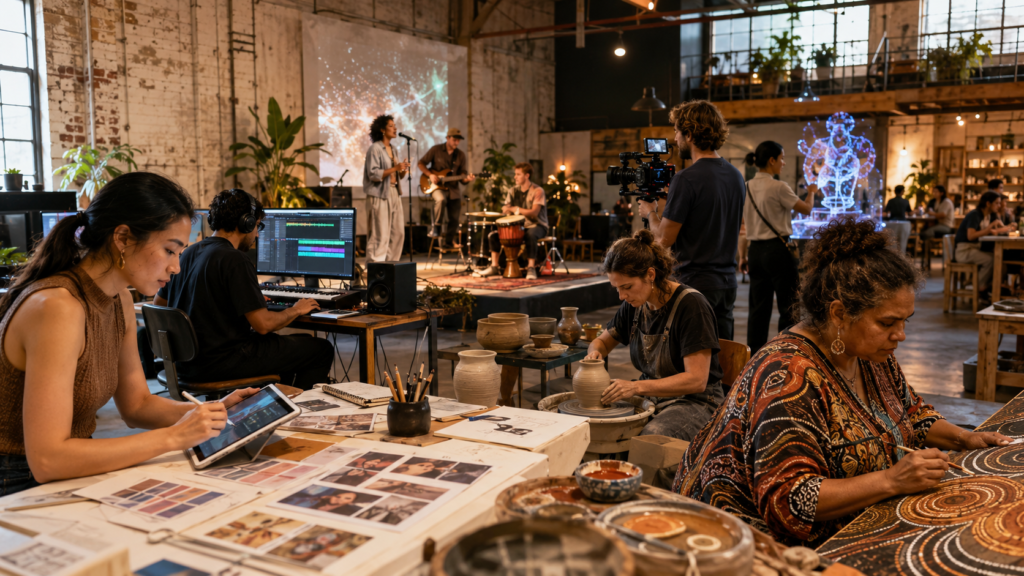
Five verticals are attracting the bulk of new ventures. Design and visual communications lead, fuelled by demand for brand storytelling and digital interfaces. Performing arts has rebounded strongly, with boutique production houses packaging immersive theatre experiences for corporate events. Music and sound production is expanding beyond recording studios into wellness apps, podcast sound design and spatial audio. Literature and publishing are being reimagined through serialised digital storytelling platforms. And First Nations art, buoyed by ethical certification frameworks, is commanding premium pricing in global galleries. Each of these clusters allows a small operator to start lean and scale through intellectual property licensing.
Navigating Government Support and Funding
Australia’s policy machinery is pro-enterprise. The RISE fund and state-based arts grants have evolved into hybrid models that back commercially sustainable projects. The Creative Business Accelerator program, rolled out in 2025, offers matched funding of up to $80,000 for ventures that demonstrate export potential. Tax incentives like the Digital Games Tax Offset, now extended to immersive media, cut development costs by 40 per cent. Entrepreneurs who align their business plans with these instruments can significantly lower the risk of their first 18 months.
Emerging Business Models in Arts and Culture
The creator economy has dismantled the old gatekeepers. A ceramicist in Hobart can sell directly to collectors in Berlin via an Instagram storefront, while a collaborative mural studio in Brisbane uses augmented reality filters to turn public art into a subscription service. Experiential retail – where a gallery doubles as a café and workshop space – is generating three income streams under one roof. Shared creative hubs in cities like Marrickville and Footscray are lowering overheads and sparking cross-pollination between filmmakers, jewellers and VR developers. The common thread is that intellectual property, not physical inventory, drives the balance sheet. For those willing to treat culture as a product, the canvas of opportunity stretches far beyond the studio wall.