How Australian Robotics Startups Are Modernising Manufacturing and Logistics with Autonomous Systems
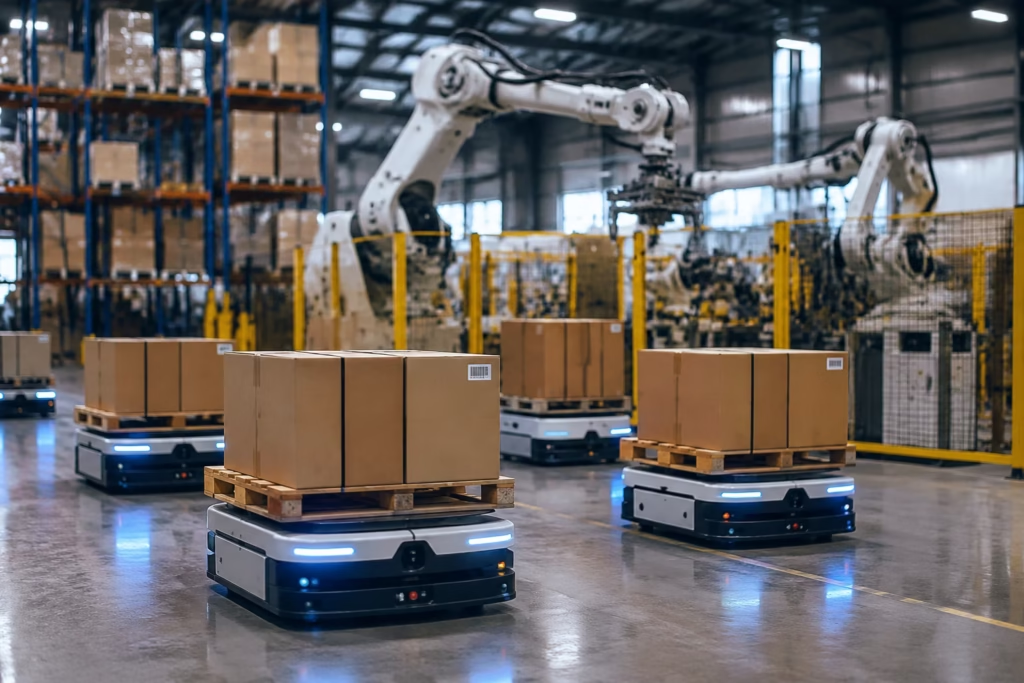
The floor of an Australian distribution centre in 2026 looks increasingly automated. Autonomous mobile robots transport pallets, robotic arms pick individual items, and AI-driven vision systems inspect packages before dispatch. This is not a multinational showcase; it is increasingly the work of local startups. Australia’s robotics companies are moving from university labs and pilot projects into full-scale industrial deployments, supported by federal policy and growing investor confidence.
National Robotics Strategy Sets the Commercial Direction
The Australian Government’s National Robotics Strategy, released by the Department of Industry, Science and Resources, provides a clear framework for accelerating adoption in manufacturing, agriculture, resources and services. It highlights that faster automation adoption could contribute between AUD 170 billion and AUD 600 billion annually to the economy by 2030. The full strategy is available at industry.gov.au. By naming priority sectors and aligning public funding, the strategy reduces uncertainty for startups and their investors.
Startups Move from Prototype to Production
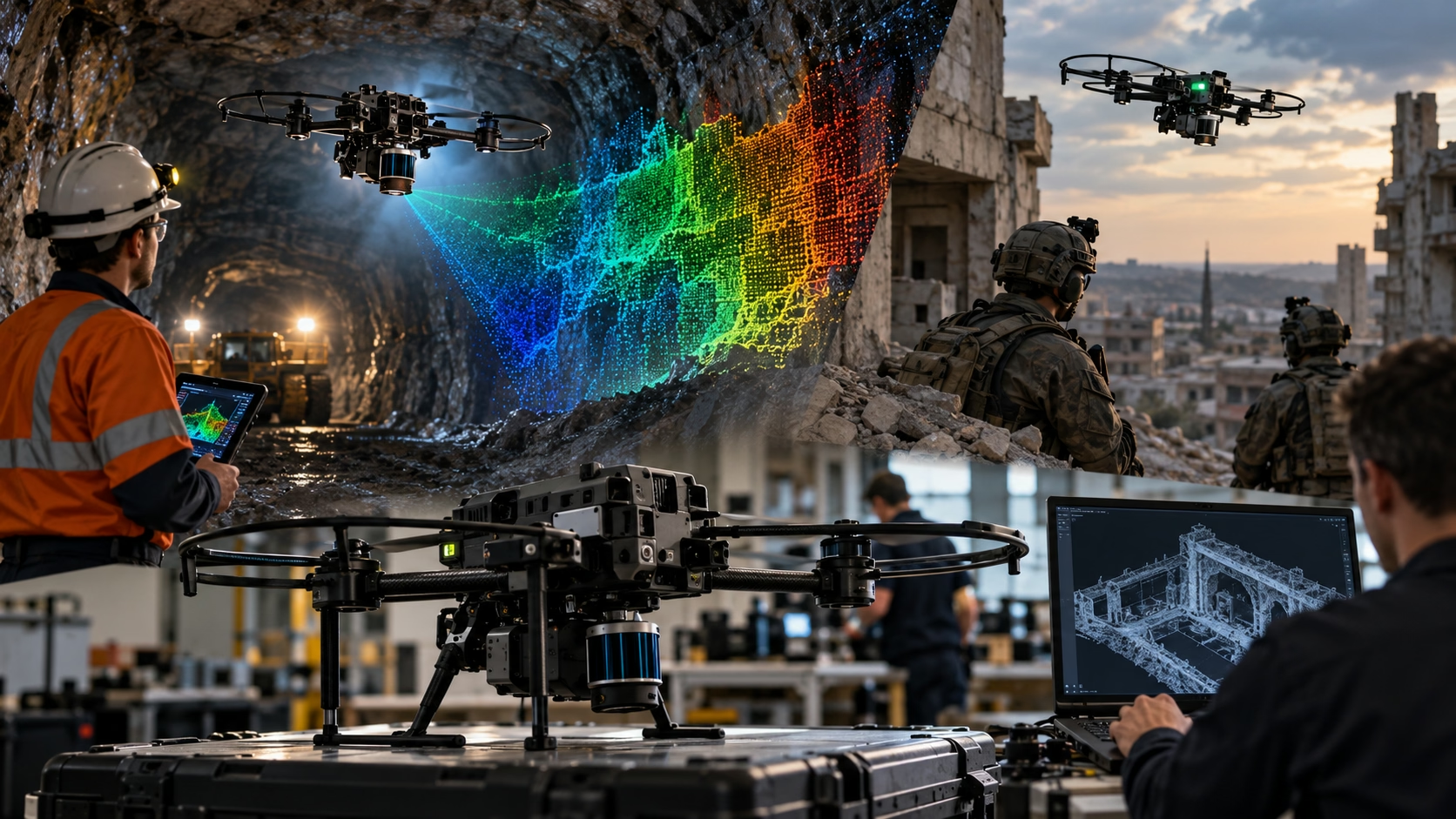
Several Australian startups have crossed the commercialisation threshold. Advanced Navigation in Sydney builds AI-powered navigation and robotics systems that work in GPS-denied environments. Lyro Robotics in Brisbane has developed machine vision and robotic picking technology for fresh produce and parcel handling. FBR Limited continues to refine its Hadrian X bricklaying robot, targeting residential construction where skilled labour is scarce. Each company solves a specific operational problem rather than offering generic automation.
Warehouse Automation Is the Fastest Commercial Win
The most rapid adoption is in logistics and warehousing. High labour costs and the growth of e-commerce make Australian warehouses an ideal testbed. Startups are deploying modular autonomous mobile robots that integrate with existing warehouse management systems, cutting deployment times from months to weeks. This modularity allows mid-sized distributors to automate without replacing entire facilities. The result is a broader base of customers than traditional fixed automation allowed.
Why Australian Conditions Create Export-Ready Technology
Mining, agriculture and remote logistics expose robots to dust, heat, uneven terrain and limited connectivity. Australian startups have to engineer reliability into their hardware and software from day one. This ruggedisation makes their products attractive in international markets with similar conditions, such as South America, Southeast Asia and parts of North America. Autonomous inspection robots developed for Australian mines are now being used in underground operations overseas.
Investment and Industry Signals in 2026
Venture capital remains selective, but late-seed and Series A rounds are growing for startups with deployed fleets and revenue. Government-backed initiatives such as the Advanced Robotics for Manufacturing Hub in Brisbane connect robotics companies with manufacturers that need automation. Industry data from Robotics Australia Group points to more than 1,100 robotics-related organisations operating across the country, spanning hardware, software and integration services.
The Next Phase: Scale and Standardisation
The central challenge for Australian robotics startups is no longer invention but scale. Standardising safety certifications, improving interoperability between robot fleets and training more robotics technicians will determine how quickly the sector converts technical strength into durable economic advantage. As global supply chains continue to shift, Australia’s automation industry is well placed to export not only raw materials but also the machines and software that extract, move and transform goods.