Australia’s Commercial Property Market in 2026: A Selective Reset Creates New Investment Opportunities

A Market Defined by Divergence, Not Decline
Australia’s commercial real estate sector entered 2026 not with a boom or bust, but with a deliberate recalibration. Higher interest rates, more realistic pricing, and a clearer understanding of post-pandemic space utilization have created a landscape where asset selection matters more than ever. National office vacancy reached 15.9% in January 2026, up from 15.2% in mid-2025, yet beneath this headline lies a far more nuanced story. Prime, well-located towers with strong ESG credentials continue to attract tenants, while older, less efficient assets fall further out of favour. This bifurcation is not a sign of weakness but of a market maturing.
Industrial and Logistics: The Structural Outperformer
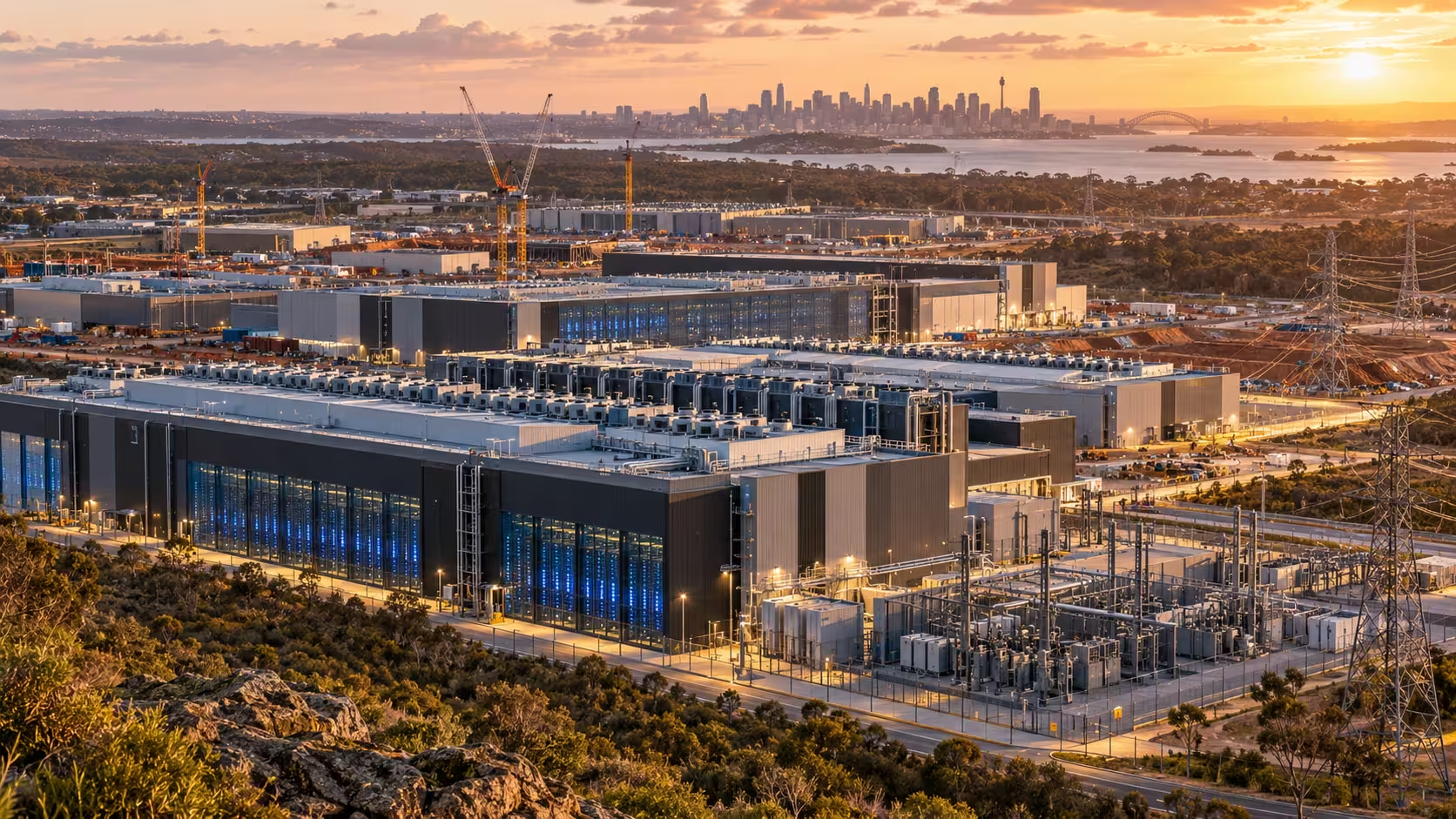
Industrial and logistics assets remain the structural winners of the past decade, and that theme continues into 2026. National industrial vacancy reached approximately 3.2% in the second half of 2025 and is expected to remain below 4% through 2026, keeping conditions tight by historical standards. According to Knight Frank’s Q1 2026 report, 2026 industrial completions are forecast to fall a further 20%, following a 19% decline in 2025. This supply contraction, driven by higher construction costs and tighter funding conditions, is expected to underpin renewed rental growth across key east coast markets. Sydney has the lowest industrial vacancy at 2.9%, followed by Melbourne and Brisbane at 4.5%. For investors, the message is clear: the industrial sector’s fundamentals remain robust, supported by e-commerce growth, supply chain reconfiguration, and infrastructure investment.
Retail’s Quiet Stabilisation
After several challenging years, retail is quietly stabilising. Large, dominant centres and convenience-based strips anchored by supermarkets, medical services, and daily-needs tenants are proving more resilient, supported by population growth and limited new supply. Retail returned 9.8% for the year, made up of 5.9% income and 3.7% capital growth, with sub-regional centres leading the sector at 12.0% total return. Institutional capital is re-entering the retail property market, signalling renewed confidence in the sector’s fundamentals. Western Australia continues to be the standout state, with retail there returning 11.4% and capital growth of 4.5%.
Office’s Nuanced Recovery
Office remains the most scrutinised sector, but the story is more nuanced than headline vacancy figures suggest. A sharp slowdown in new developments is already underway because of higher construction costs and tighter funding conditions. The pipeline of new office supply is thinning across key CBDs, suggesting much of today’s vacancy is already locked in. Over the next three to five years, this could leave tenants with fewer new options and gradually return bargaining power to owners of high-quality stock. Brisbane CBD office returned 10.8%, the strongest result of any office market nationally, where vacancy has fallen to 10.2% from 11.8% as the supply pipeline thins out.
The Investor’s Playbook for 2026
For investors, 2026 is a year of strategic positioning rather than broad-brush acquisition. The gap between premium and secondary assets is widening, and disciplined underwriting is essential. As Cushman & Wakefield’s Australian Commercial Real Estate Outlook 2026 notes, “asset selection, infrastructure readiness and income durability will define performance across the cycle”. The opportunity lies in understanding the micro-dynamics of each asset class and capitalising on the divergence.