Inside Australia’s Startup Game Ecosystem: Why Small Studios Are Winning International Attention
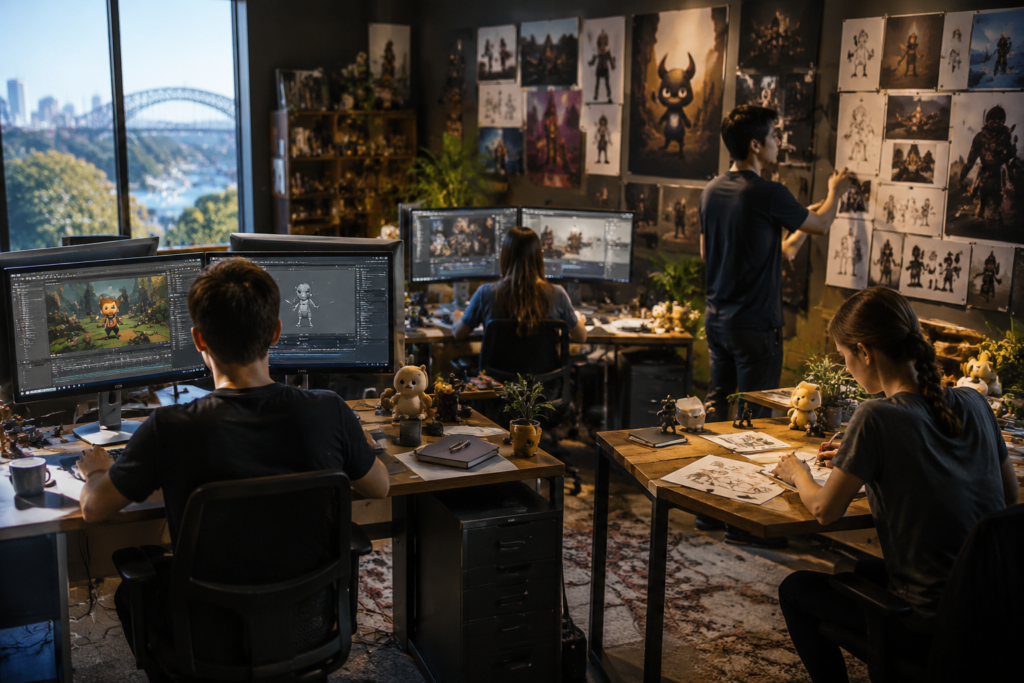
Australia’s game development landscape is increasingly shaped by small studios with international ambitions. Rather than building enormous teams to compete directly with multinational publishers, Australian startups often focus on tightly defined projects, distinctive visual direction, and gameplay that can be communicated immediately to players.
This model reflects both economic necessity and creative opportunity. Developing games in Australia can involve high salaries, long production cycles, limited domestic financing, and significant distance from major publishing centers. At the same time, digital storefronts enable a studio in Melbourne, Adelaide, Brisbane, or Sydney to reach the same global customers as a developer based in Los Angeles or Tokyo.
A Startup Ecosystem Built Around Flexible Production
Many Australian studios begin with fewer than 20 employees. Their teams may include programmers, artists, designers, producers, writers, audio specialists, and contractors working remotely. This structure allows developers to remain flexible, although it can also make them vulnerable to delayed funding, changing platform requirements, or unsuccessful launches.
Public support has become an important part of the ecosystem. Screen Australia provides information about game-related development and production opportunities through its official Games funding and support portal.
Government-backed support can help studios create prototypes, validate concepts, prepare publisher presentations, or move toward commercial production. For early-stage companies, these activities are critical because investors and publishers usually want evidence that a project is technically achievable and commercially relevant.
Originality Functions as a Business Strategy
Australia’s most visible independent games show that creative identity can be a commercial asset.
Team Cherry, based in Adelaide, built international recognition through Hollow Knight. The game’s atmospheric world, hand-drawn art, precise combat, and extensive exploration helped it stand out in a competitive genre. Its success also showed how crowdfunding, community engagement, PC distribution, and console releases can support the growth of an independent intellectual property.
Melbourne-based House House achieved a different kind of breakthrough with Untitled Goose Game. The project turned an uncomplicated comedic concept into a highly recognizable brand. Its success was strengthened by social media, streaming culture, word-of-mouth recommendations, and a premise that could be understood within seconds.
These cases are not identical business formulas. They demonstrate that Australian studios can compete by finding a clear emotional or visual promise and delivering it consistently.
Global Publishers Can Accelerate Market Access
International publishers remain valuable for startups that lack marketing resources or platform relationships. A publisher may provide development finance, localization, quality assurance, console certification support, public relations, and access to retail or subscription services.
The trade-off is that studios may surrender part of their revenue, ownership, or decision-making authority. Founders must examine milestone schedules, recoupment terms, marketing commitments, intellectual-property clauses, and sequel rights before signing an agreement.
Building Companies Beyond a Single Successful Game
A successful launch does not automatically create a sustainable studio. Revenue can decline quickly after release, while salaries and development expenses continue. Australian startups therefore need plans for downloadable content, additional platforms, licensing opportunities, new projects, or long-term community management.
Entering 2026, the biggest opportunity is not merely producing more games. It is creating companies capable of retaining experienced workers, managing multiple projects, owning valuable intellectual property, and building direct relationships with global audiences.
Australia’s startup ecosystem is strongest when creative experimentation is supported by financial discipline. Studios that understand both game design and business fundamentals are better positioned to turn international attention into lasting growth.