How Australian Food and Beverage Manufacturers Are Adapting to 2026 Consumer Wellness and Sustainability Trends
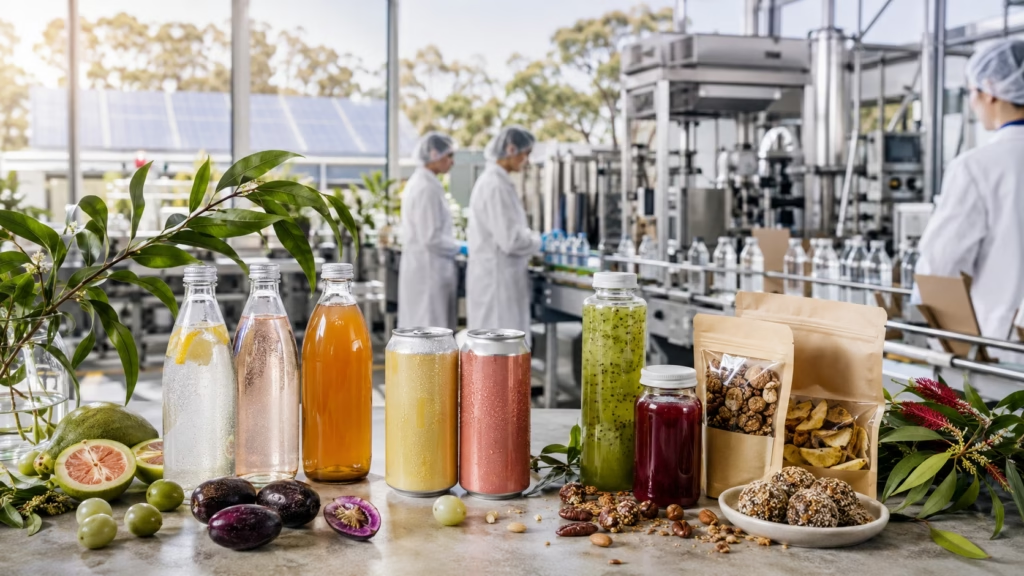
Industry Snapshot: A Sector in Transformation
Australia’s food and beverage manufacturing industry has maintained its position as one of the nation’s largest manufacturing employers, generating an estimated A$134 billion in annual revenue during the 2025–26 financial year. Direct employment across processing, packaging, logistics, and quality assurance now sits at around 233,000 workers. According to the Australian Food and Grocery Council’s State of the Industry 2026 report, available at https://www.afgc.org.au/industry-resources/state-of-the-industry/, the sector has shown resilient growth despite persistent cost pressures from energy, freight, and imported ingredients. Domestic consumption remains stable, but the composition of that consumption is changing quickly.
Wellness Becomes Non-Negotiable
Consumer demand has shifted decisively toward products that support immunity, digestion, and mental clarity. Beverage companies are launching low-sugar kombuchas, vitamin-infused sparkling waters, and prebiotic sodas at a rapid pace. Food manufacturers are replacing artificial preservatives, colours, and refined sugars with native botanicals such as lemon myrtle, Davidson plum, and Kakadu plum. These ingredients not only deliver functional benefits but also give brands a distinctive Australian story that resonates overseas. This clean-label movement is no longer a niche: major supermarket chains now dedicate entire chilled aisles to naturally functional drinks and snacks, and private-label ranges are expanding to capture value-conscious wellness shoppers.
Sustainability Moves From Promise to Proof
Packaging waste, water use, and carbon footprint have become top concerns for both consumers and regulators. Major dairy processors are trialling recycled PET bottles and lightweight glass, while snack brands are moving toward home-compostable wrappers made from plant starch. The 2026 AFGC report notes that 64% of Australian shoppers say they are willing to pay a premium for products with verified sustainable packaging. This shift has pushed companies to adopt carbon-neutral manufacturing lines, install solar arrays at regional plants, and introduce water recycling systems that can cut usage by up to 30%.
Real-World Momentum: Non-Alcoholic and Low-Sugar Innovation
A compelling current example is the acceleration of non-alcoholic craft beverages. Australian brands such as Naked Life and Remedy Drinks have reported double-digit sales growth in functional non-alcoholic cocktails and sugar-free fermented drinks. Their success shows that consumers are not simply avoiding alcohol; they are actively choosing sophisticated, better-for-you alternatives that fit social occasions without compromising taste. This momentum is driving investment in small-batch fermentation, botanical extraction, and cold-chain distribution, particularly in Melbourne and the Sunshine Coast, where manufacturing hubs are expanding.
Digital Grocery and Direct-to-Consumer Channels
Online food and beverage sales have stabilised at around 12% of total grocery spend. Companies are using first-party data to personalise subscription boxes for protein snacks, ready-to-drink cold brew, and meal replacement shakes. Artificial intelligence now helps manufacturers forecast demand for seasonal flavours and manage inventory across third-party logistics networks, reducing waste and out-of-stock rates. This digital capability is also helping smaller brands compete with multinationals by lowering customer acquisition costs and enabling rapid feedback loops.
What Lies Ahead
Rather than a simple post-pandemic rebound, the industry is entering a structural realignment where health, sustainability, and convenience converge. Companies that combine local sourcing with transparent labelling and efficient digital distribution are likely to capture the largest share of household spending through late 2026.