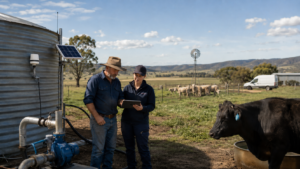
Empowering Australian SMEs Through Technological Innovation

Small and medium-sized enterprises (SMEs) are the backbone of Australia’s economy, contributing significantly to employment and GDP. In today’s rapidly evolving business environment, technology has become a critical enabler for SMEs, providing tools and solutions that enhance efficiency, competitiveness, and innovation. Among these, cloud computing, artificial intelligence (AI), and digital platforms are transforming how SMEs operate, compete, and scale.
Cloud computing offers SMEs the ability to access scalable computing resources without the burden of large infrastructure investments. Platforms such as Microsoft Azure, Amazon Web Services (AWS), and Google Cloud allow businesses to store data securely, manage applications remotely, and streamline operational processes. For example, Australian retailers are leveraging cloud-based point-of-sale systems to integrate inventory, sales, and customer management, enabling real-time decision-making. Additionally, cloud technology facilitates collaboration among distributed teams, supporting the growing trend of remote work across industries.
Artificial intelligence is another transformative technology that is reshaping SME operations. AI-powered solutions, from predictive analytics to automated customer support, help businesses optimize their operations and improve decision-making. Australian SMEs in sectors such as finance, health, and logistics are using AI-driven tools to forecast demand, personalize marketing campaigns, and automate routine tasks. This adoption not only reduces operational costs but also enhances customer experience and business agility.
Digital marketing technologies are increasingly vital for SMEs to expand their reach and attract customers. Social media platforms, search engine optimization (SEO) tools, and customer relationship management (CRM) systems enable small businesses to compete with larger corporations by reaching targeted audiences effectively. Australian SMEs are using these platforms to create personalized campaigns, track engagement metrics, and respond to customer feedback promptly. This approach allows for data-driven marketing strategies that are cost-efficient and measurable.
E-commerce solutions further enable SMEs to access global markets without the need for physical storefronts. Platforms such as Shopify, WooCommerce, and BigCommerce allow businesses to create online stores, manage inventory, process payments securely, and integrate logistics systems. In Australia, SMEs are increasingly tapping into cross-border e-commerce, using technology to export products efficiently and monitor international demand patterns.
Moreover, emerging technologies such as blockchain and Internet of Things (IoT) are beginning to influence SME strategies. Blockchain can enhance supply chain transparency and security, which is critical for SMEs involved in manufacturing, retail, and food industries. IoT devices, on the other hand, help track assets, monitor equipment performance, and provide actionable insights for operational efficiency.
Despite the benefits, SMEs face challenges in adopting these technologies, including limited budgets, lack of technical expertise, and cybersecurity concerns. Government programs and private initiatives, however, are providing support through grants, training, and consulting services to facilitate digital transformation among Australian SMEs. For instance, the Australian government’s Digital Solutions program offers funding to help small businesses adopt digital tools, including cloud computing and AI.
Overall, technology is not just a tool but a strategic asset that empowers Australian SMEs to innovate, compete, and grow sustainably. By embracing cloud computing, AI, digital marketing, and e-commerce solutions, SMEs can strengthen their operational resilience, expand their market reach, and achieve long-term business success.